Pharm in the garden: new discoveries unlock medical potential of deadly blooms
Researchers achieve first steps to recreating powerful, plant-derived chemicals in lab
Wander through MSU’s Beal Botanical Garden and you’ll come across the Injurious Plant collection, home to leafy tenants whose natural chemicals can cause irritation, poisoning or worse.
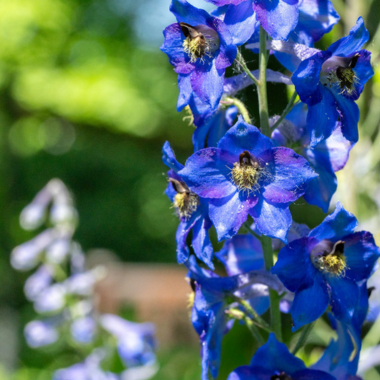
It's here you’ll discover larkspur’s vivid, swoop-tailed flowers, as well as wolfsbane — with hood-shaped petals so deeply purple they’re reminiscent of crushed velvet.
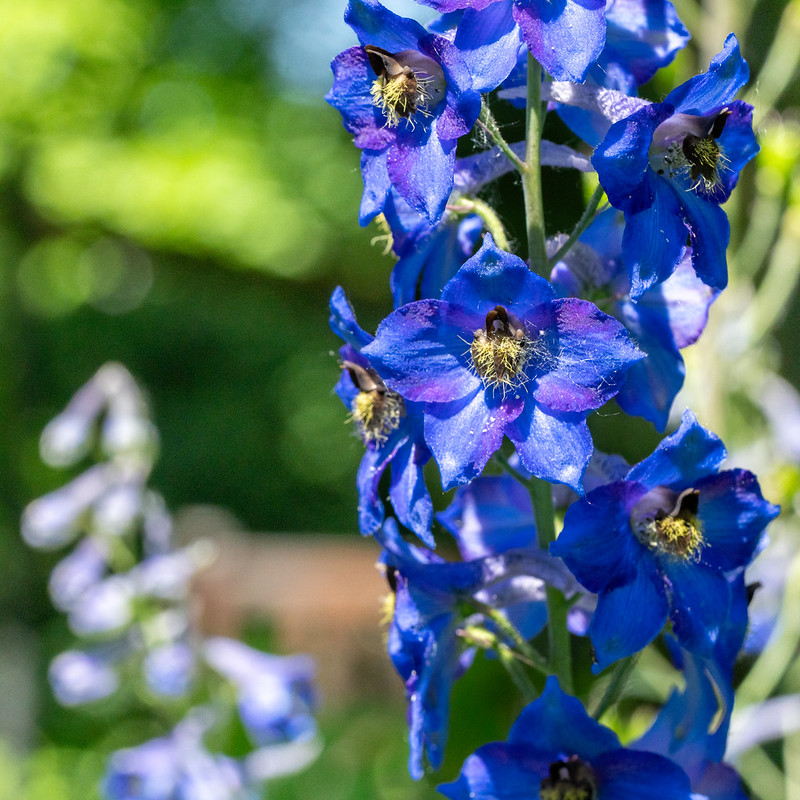
The two plants produce a large family of chemicals that certainly earn them the label “injurious.” Cattle herds in the American West can be decimated if they happen to graze on wild larkspur, while history and literature brim with references to wolfsbane as a poison of choice for hunting and subterfuge.
In a molecular twist, though, these same compounds — able to cause neurotoxicity and paralysis in just tiny amounts — also possess powerful medicinal qualities.
These include chemicals known to combat pain, malaria, cancer and pests.
Now, for the very first time, researchers at Michigan State University and the Czech Academy of Sciences have discovered the early biochemical steps needed to synthesize these high-value substances in the lab.
The breakthrough, published in the journal Molecular Plant, has the potential to open new frontiers of study that can lead to improved, naturally-sourced therapeutics.
“These plants have been used in different forms of medicine throughout the world for thousands of years,” said MSU alum Garret Miller, co-first author of the paper and now an assistant professor of biotechnology at University of Michigan-Flint.
“We know they interreact with our bodies in so many ways, and understanding how to create them can help provide totally new routes of testing.”
Two plants, both alike in chemistry
For all the headway made in modern science, one adage holds true: nothing beats nature.
“Plants are the best chemists around, upgrading their arsenal of natural compounds over millions of years to help them survive,” said Björn Hamberger, study author and the James K. Billman Endowed Professor in MSU’s Department of Biochemistry and Molecular Biology.
“Humans have found countless uses for these molecules in everyday life,” added Lana Mutabdžija, a graduate student at the Czech Academy of Sciences and co-first author of the latest paper.
“These include caffeine, capsaicin, menthol and vanillin, not to mention the fact many of the medicines we use today either come directly from plants or are inspired by plant chemistry.”

At MSU, the Hamberger Lab explores these diverse compounds, better known as specialized metabolites, and how they can be leveraged for the greater good.
In recent years his team had set their sights on larkspur — also called delphinium for its dolphin-shaped flowers — wanting to know exactly how the plant produced a mix of toxic-yet-promising chemicals known as diterpenoid alkaloids.
This, of course, was easier said than done.
Diterpenoid alkaloids are the intersection of the two oldest and largest classes of plant chemicals on the planet, and researchers have faced an uphill battle to determine their mind-bendingly complex structures.
Despite being isolated nearly 200 years ago, one of the best-known compounds, aconitine, still hasn’t been successfully synthesized in a lab.
Luckily, the new project benefited early on from some serendipitous collaboration.
While attending a research conference in Barcelona, Hamberger crossed paths with scientists from the lab of Tomáš Pluskal at the Czech Academy of Sciences.
The Pluskal Group, including Mutabdžija, were pursuing the same tricky diterpenoid alkaloids in a notoriously poisonous larkspur relative, wolfsbane, otherwise known as monkshood.
“When this happens, we can either go our own ways, or come together, and it’s joining up that always leads to the best science,” said Hamberger.
Blueprints and biofactories
With an international team assembled, the researchers began the task of identifying the exact chemical pathway the two plants took to produce their diterpenoid alkaloids.
Like a molecular scavenger hunt, this meant searching through multiple species of larkspur and wolfsbane, tracking thousands of individual genes to see which were “switched on” in certain plant tissues at the right time.
“You can imagine a biosynthetic pathway almost as an assembly line,” said Miller, who earned his Ph.D. in the Hamberger Lab. “If you have ten steps in a row needed to build a finished product, and suddenly one quits, the next steps can’t happen.”
Because plants naturally produce specialized metabolites slowly and in tiny amounts, discovering these pathways is a vital step toward engineering plant chemistries that can tackle real-world, large-scale challenges.
After solving a pathway, the unique genetic blueprints for a compound can be inserted into a specially engineered host organism, such as yeast.
Through this bit of biohacking, the organism will begin producing the compound on its own in larger quantities, paving the way for expanded testing and development.
“In an ideal scenario, this could eventually help create new drugs inspired by these natural products,” said Mutabdžija.
Once the team narrowed down a promising set of genes in wolfsbane and larkspur, those genetic codes were inserted into tobacco plants, which acted as ready-made biofactories.
When these tobacco plants were analyzed for the chemicals they’d been producing after being given new genes, the team finally had their “assembly line”: six unique enzymes that successfully created a diterpenoid alkaloid called atisinium.
These enzymes helped the compound fold into its complex final shape and facilitated the addition of a crucial and unexpected nitrogen source.
Knowing the initial biochemical steps needed to produce atisinium gives researchers a new foothold on the path to unlocking the potent, medicinal qualities found across the larger diterpenoid alkaloid family.
“Our vision is to provide green, sustainable tools that will allow us to harness these plants’ natural power,” said Hamberger.
Local roots
As the researchers worked to uncover the molecular mysteries behind larkspur and wolfsbane, it became clear they’d achieved science worth sharing — discoveries that could connect with anyone who’s tended a garden filled with brilliant blooms.
And when Molecular Plant asked the team to create a journal cover for their upcoming publication, Hamberger knew he didn’t have to look far for someone to help bridge the distance between cutting-edge science and inspiring art.
At a recent East Lansing Art Festival, he’d crossed paths with local artist Marissa Tawney Thaler, whose booth was filled with colorful, origami-inspired illustrations of birth flowers — one of which just happened to be larkspur.

As it turned out, Thaler had worked with a doctoral student from Hamberger’s Lab in the past on science-inspired visuals used in a dissertation, and after a few conversations about the new diterpenoid alkaloid project, she found herself back in the realm of specialized metabolites.
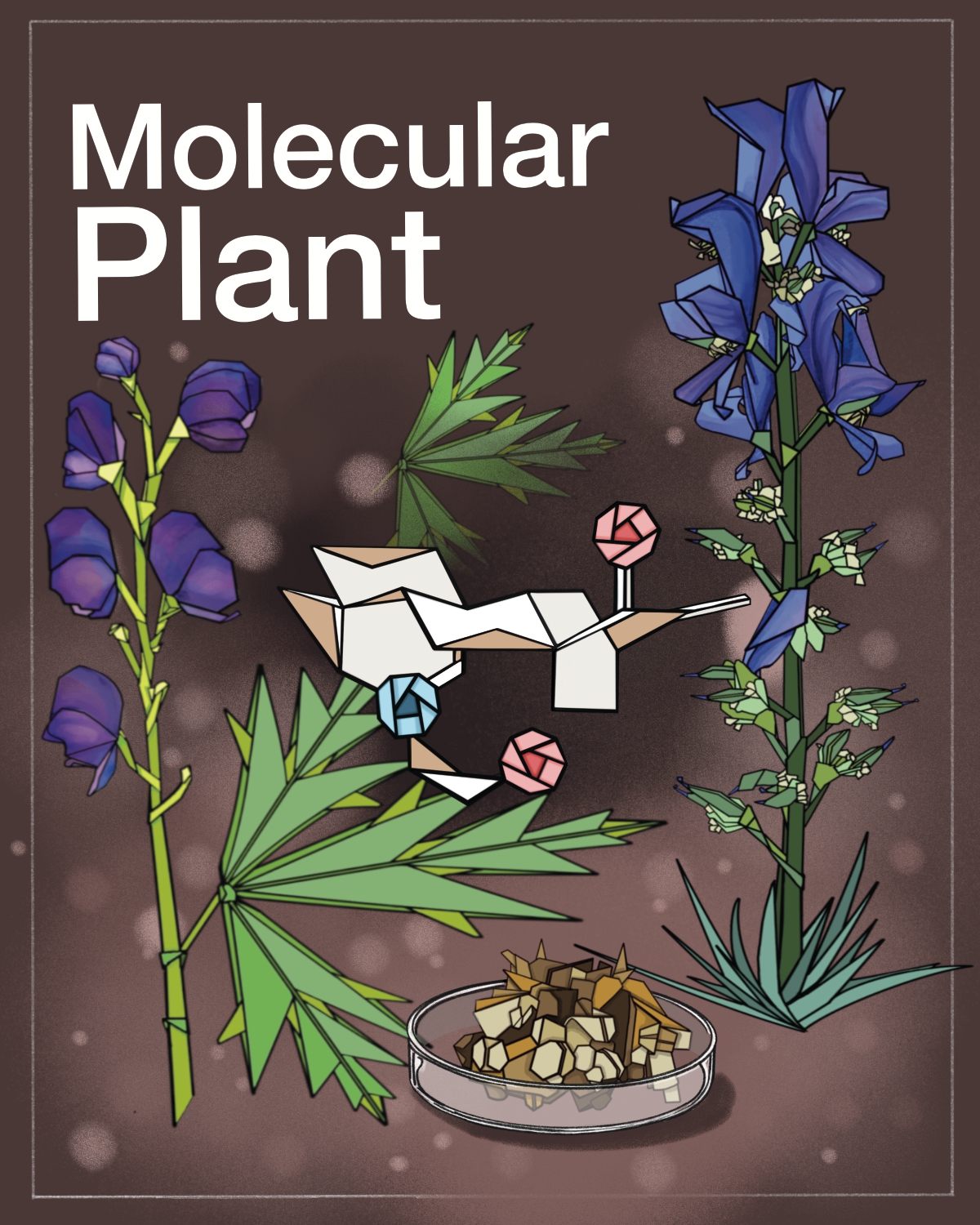
The final cover features a collage of images rendered in Thaler’s origami style. These illustrations work to capture the planes, creases and folds paper might take to create complex, three-dimensional objects.
On the cover, you’ll find purple wolfsbane, indigo larkspur, a brown-and-gold cell culture in a petri dish, as well as a molecular representation of atisinium with color-coded nodes for oxygen and nitrogen atoms.
For Thaler, designing the cover meant working closely with researchers on drafts and sketches, all the while trying to blend artistic and scientific elements into a single creation.
“It was two specialties coming together and finding that space between being aesthetically beautiful and technically correct,” said Thaler, who’s known for her children's book illustrations and public murals found across Michigan.
In the global moment faced by science, Thaler and Hamberger both hold art as a form of communication that couldn’t be more vital.
“Science is how we understand the world around us, and art is what makes us innately human,” said Thaler. “I think people can feel science is out of their reach, but a visual invites someone to deepen their understanding, be curious and ask questions.”
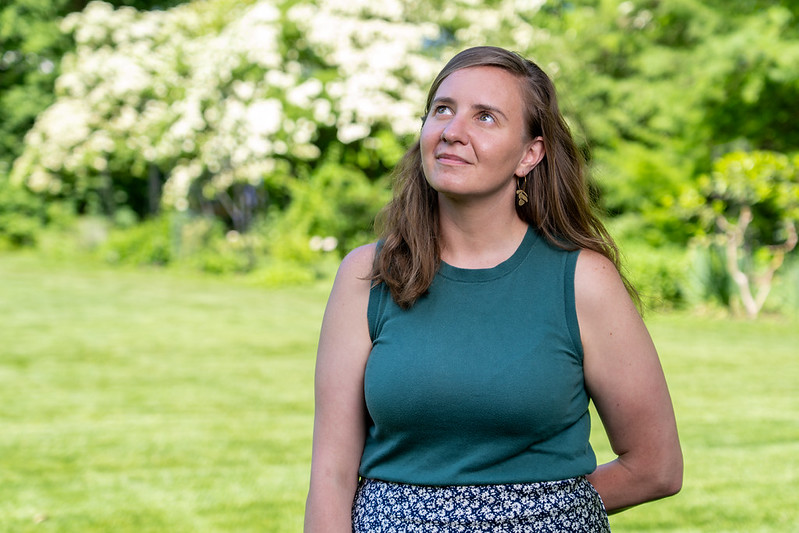
“The intersection of art and science is important for public outreach, and it’s fantastic for us as people living in a lab to have activities that go beyond pipetting,” added Hamberger.
The idea of outreach is a throughline for Hamberger’s research, who often studies plants found in own our backyard, from mint to moss. This focus has led to working closely with MSU’s Beal Botanical Garden, a curated collection of over 2,000 plants just a few steps from Spartan Stadium.
As a “living laboratory,” Beal provides MSU and the larger community access to a thriving green space used for education, conservation, and breakthrough science – not to mention the perfect spot for a calming, midday walk.
Rather than go to a greenhouse, plant scientists like Hamberger can collaborate with Beal Garden specialists, gaining access to samples and specimens in an outdoor, natural setting. These cross-campus connections are foundational aspects of the garden’s commitment to teaching, outreach and research.
“As a resource we provide material to our researchers, and in return, they educate us about our plants’ incredible resiliency and adaptations,“ said Katie Fry, who as Beal Collections Manager identified local wolfsbane and larkspur specimens for Hamberger’s team.
“This research helps us understand that plants aren’t just a part of the landscape but are full of complexities worth learning — and the Beal Garden is someplace you’ll always discover something new.”